What is actually in a pomelo
The pomelo is the largest citrus fruit there is, and most of it is water. The interesting number is not the calories. It is the vitamin C, and how far it sits above the fruit it usually gets compared with.
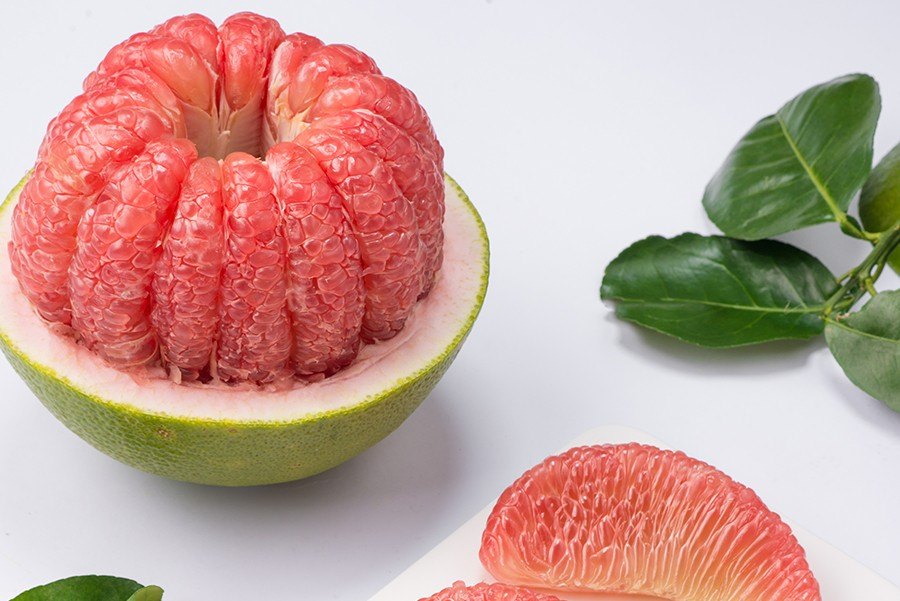
Per 100 g of flesh
These are reference values for raw pomelo from the United States Department of Agriculture's food composition database. They describe the fruit in general, not any one lot, and the entry does not separate one variety from another.
| Per 100 g | Amount |
|---|---|
| Water | 89.1 g |
| Energy | 38 kcal |
| Carbohydrate | 9.6 g |
| Fibre | 1.0 g |
| Protein | 0.8 g |
| Fat | 0.04 g |
| Vitamin C | 61 mg |
| Potassium | 216 mg |
| Phosphorus | 17 mg |
| Magnesium | 6 mg |
| Calcium | 4 mg |
| Sodium | 1 mg |
Source: USDA FoodData Central, pummelo, raw (FDC ID 167754).
The number worth noticing
Vitamin C, at 61 mg per 100 g. The same database gives raw pink and red grapefruit 31.2 mg, so pomelo carries about twice as much, weight for weight, with slightly fewer calories (38 kcal against 42) and more potassium (216 mg against 135).
| Per 100 g | Pomelo | Grapefruit, pink and red |
|---|---|---|
| Energy | 38 kcal | 42 kcal |
| Vitamin C | 61 mg | 31.2 mg |
| Potassium | 216 mg | 135 mg |
| Fibre | 1.0 g | 1.6 g |
Source: USDA FoodData Central, FDC ID 167754 and 174673.
We are not going to tell you what that does for your body. That is a question for a doctor or a dietitian. What we can tell you is what is in the fruit, and where the figure comes from.
Why your lot will not read exactly 61
Published figures are an average. A real pomelo sits somewhere around it, and three things move it:
Variety
The database entry is simply "pummelo". It does not distinguish green-skin pomelo (bưởi da xanh) with its pink flesh from Năm Roi with its pale flesh, or either of them from the varieties grown in Thailand or China. They are different trees, grafted from different lines, and they do not give identical readings.
Ripeness at harvest
Sugars rise and acidity falls as the fruit ripens on the tree. A pomelo cut early tastes sharp and reads lower on a refractometer. That is why Brix is checked in the field before a lot is accepted for packing, not at the port.
Time since harvest
Vitamin C is not stable. It declines in storage, and the rate depends on temperature and time. A pomelo eaten a week after picking and one eaten after five weeks at sea are not the same fruit on paper.
For anyone building a label. At 61 mg per 100 g, the reference value is about two-thirds of the 90 mg Daily Value used on US nutrition labels, and well above the levels the European Union sets for a vitamin C nutrition claim. But a compliant panel has to describe the product as sold, after transit, not a database average. We supply the analysis for the lots we ship, in the format your market requires.